Articles and Blog

Mass Timber Moisture Content: Optimal Levels for Material Performance

Construction Drying, Temporary Climate Solutions, Remote Monitoring and Control

Mass timber is designed to provide strength and stability, but its moisture content plays an important role in how the material performs. Wood that is too dry can shrink and crack, while excessive moisture can increase the risk of mold and decay.

Read

Don't Wait for the First Freeze: Building a Climate Control Strategy Before Heating Season

Construction Drying, Remote Monitoring and Control

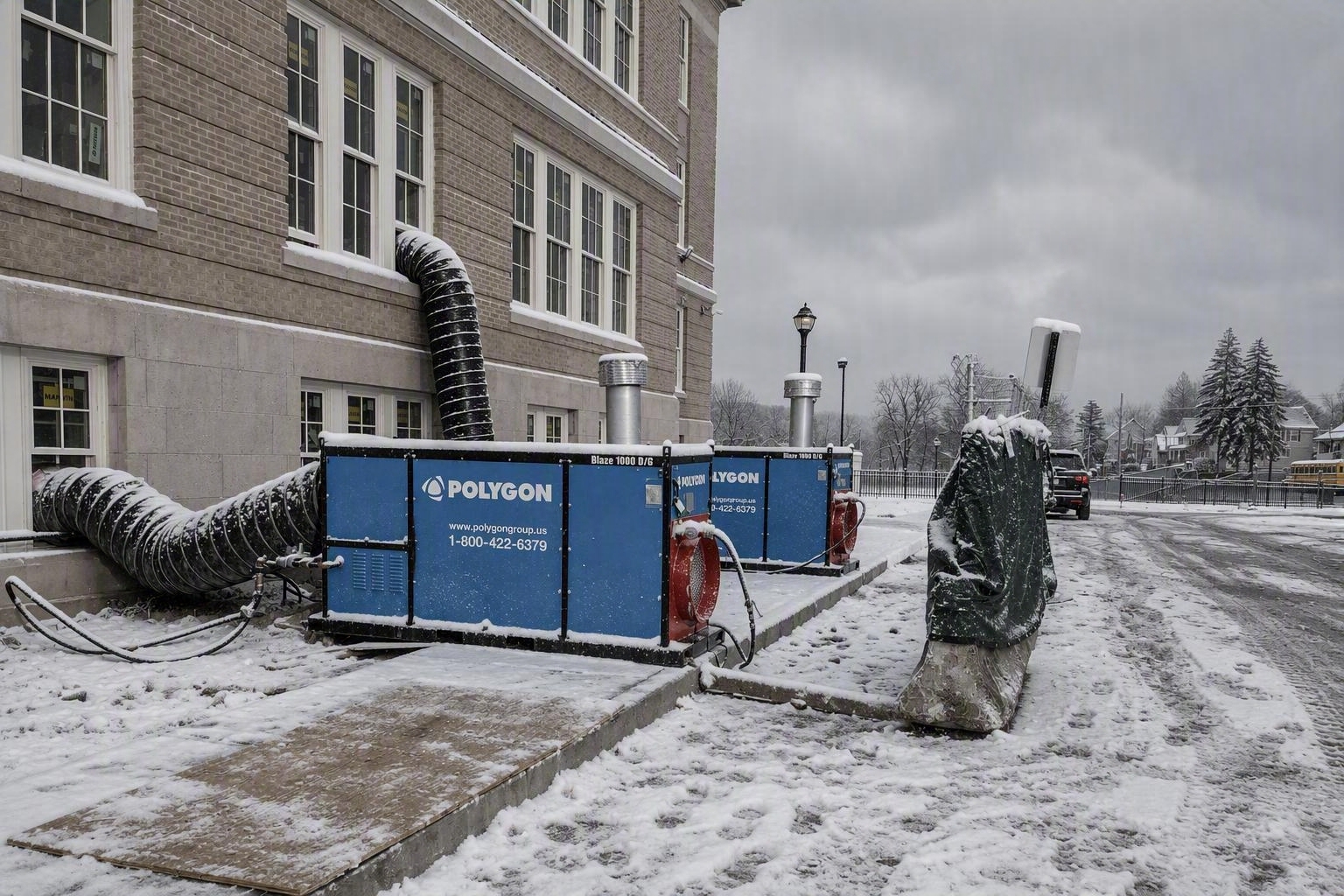
When most construction teams think about heating season, they think about heaters. But successful winter projects aren't built around heating equipment. They're built around a plan.

Read

Back to School. What Happens When You Find Mold?

Disaster Preparedness, Disaster Recovery, Document Recovery, Document Scanning, Mold Damage, Indoor Air Quality

As educators return to school after summer break, they may discover more than empty classrooms and forgotten supplies. A musty smell, warped books, stuck-together pages, and visible mold are signs that items were exposed to moisture. Schools should reconsider simply throwing away materials. Here’s what you can do.

Read

How to Achieve and Maintain Low Dew Point Conditions

Temporary Climate Solutions, Remote Monitoring and Control, Food and Pharma, Manufacturing and Industrial Processing, Indoor Air Quality

In many advanced manufacturing environments, controlling moisture is not optional; it is fundamental to process stability, product quality, and equipment reliability. One of the most important variables used to manage moisture is dew point, particularly in applications that require extremely dry air conditions.

Read

Carbon Monoxide and Temporary Heaters: Staying Safe as Buildings Close In

Construction Drying, Indoor Air Quality

As cold weather approaches and projects begin to close in, temporary heat becomes essential for keeping schedules on track and protecting materials. At the same time, enclosed spaces increase the risk of carbon monoxide (CO) exposure when fuel-burning heaters are used indoors. Understanding how CO is generated and how to monitor conditions is critical for maintaining safe environments during winter operations.

Read